AI agents for Google Ads: the ones I use, and the ones I don't

Three weeks ago I posted this on LinkedIn:
I think agents are overrated. I just manage everything in the interface. PMax and smart bidding are already agents, so it doesn't make sense to layer another agent on top. The agents I've seen peddled are actually harmful. No external agent is going to outperform Google's AI on home territory.
This site says AI does the volume in every account I run. Both statements are true at the same time, and the reason they are both true is the most useful thing I can tell you about AI in Google Ads.
The line that resolves them: it depends which side of the auction the agent works on.
Google already runs an agent in your account
Strip the branding off Smart Bidding and Performance Max and describe what they do: they observe context, make decisions toward a goal, act without asking, and learn from the results. That is an agent. It has been an agent since before the word was fashionable.
And it has home advantage. Google documents auction-time signals including the actual search query, device, location, time, browser, operating system, remarketing list and combinations of those signals. Not all of that context is available with the same granularity or timing through an advertiser's reporting API.
That is the machine this site keeps saying we trust. Day to day, I let it run. Bidding decisions, query matching, the moment-to-moment allocation inside a campaign: interface untouched. Not because attention is expensive, but because intervening there is trading against better information.
Why external bidding agents lose on home territory
The agent products being peddled to advertisers mostly work inside the auction's territory: tools that adjust bids on a schedule, robots that add negatives daily from the search terms report, layers that promise to "optimise your campaigns with AI" by nudging the same levers you can see in the interface.
Many such tools observe reporting data after auctions have occurred. That can still support governance, pacing, experiments and anomaly detection, but it is a different information set from Google's auction-time bidder. A claim to predict the same auction better therefore needs evidence beyond an AI label.
Frequent bid, budget or exclusion changes can make an account harder to interpret and can restrict eligible traffic. They are not automatically harmful and do not all reset learning in the same way. The tool should log each intervention, state the hypothesis and allow a person to approve or reverse it.
There is a useful test for any AI tool being sold to you: does it change auction controls, or does it improve the business data and review process around them? The first requires evidence that the intervention adds value beyond Smart Bidding. The second can address information the ad account does not receive by default.
What Google Ads does not receive by default
Because here is the other half, and it is the half this whole practice is built on. Google's agent is blind outside its own platform.
By default, Google Ads does not know that a call closed, a job completed or a caller was an existing customer. It can use CRM outcomes, values or eligible call-quality features only when the advertiser connects and supplies them under the relevant product and consent rules. Without that work, many accounts optimise to proxies such as form fills, duration-based calls or clicks on a contact button.
Good optimisation against a weak goal can still produce a weak business result. In the accounts this practice is built for, the first diagnostic is therefore the input and outcome definition rather than an assumption that the bidder is broken.
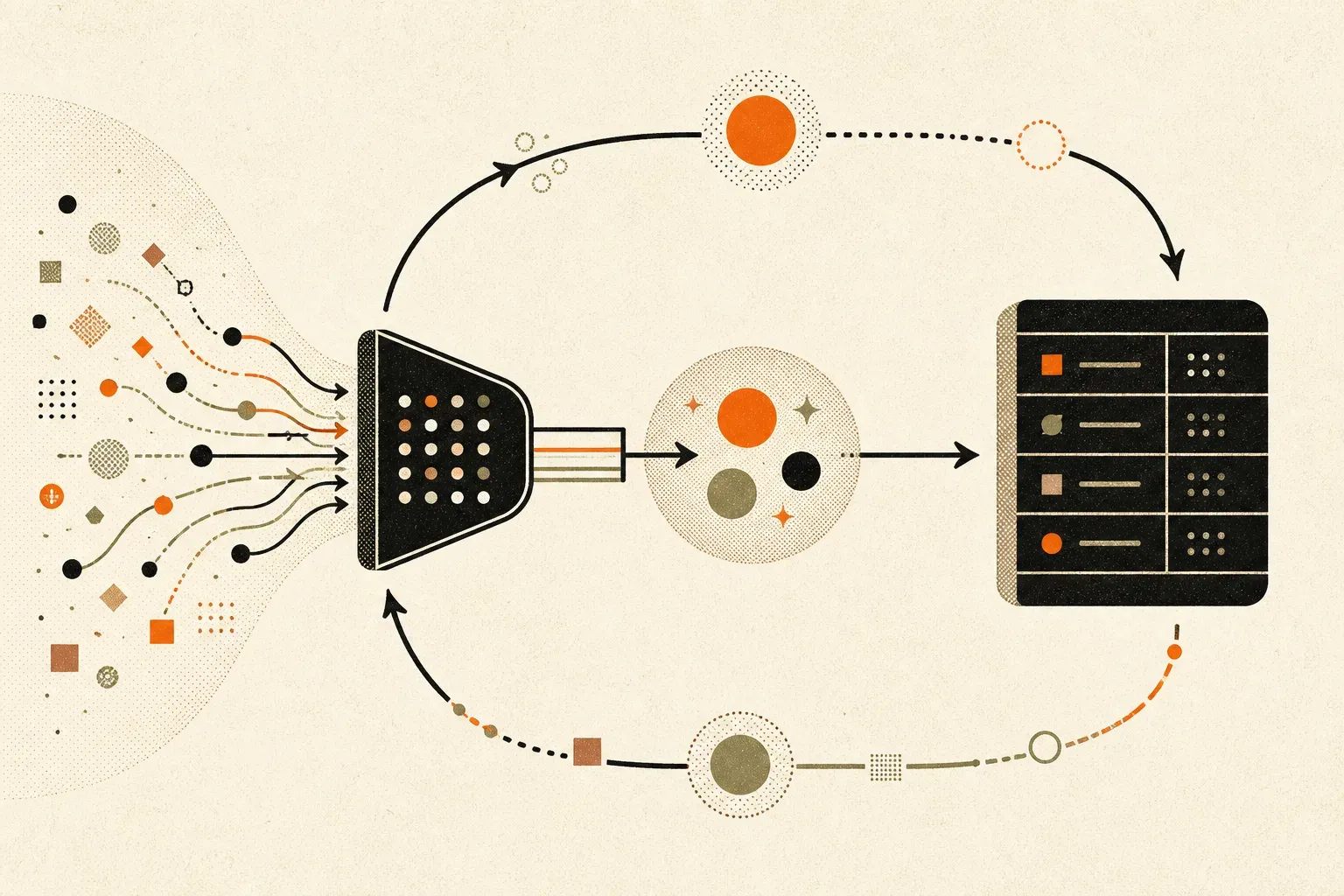
The useful agent closes the loop outside the auction: capture the lead, qualify the outcome, attach value and return it.
Where agents earn their keep: the inputs and the audit
So most of the AI-assisted work in my accounts sits around the platform, on two jobs the ad account cannot do without business data and review.
Feeding. Deriving conversion values from unit economics, testing a labelled sample of call classifications, and joining eligible outcomes to the CRM feedback loop. The model proposes or classifies against an agreed rubric; a person owns the rubric, error review and decision to use the output.
Auditing. Every week, automation pulls the numbers: spend against budget, value against the trailing period, conversion mix, search-term composition and offline-upload logs, reconciled where possible against the CRM. The machine flags movement. A person decides what to do. Where a change is needed at scale, AI can draft it and a human approves it before it is applied.
Notice the shape: the agents propose, score, reconcile and flag. They do not decide. The one agent making autonomous decisions inside the account is Google's, because inside the account, Google's is the best there is.

Automation collects and flags. The weekly decision still belongs to the person who can see the business context.
What this looks like day to day
Honestly: the interface is changed only when evidence warrants it. Bidding runs between reviews. Negatives and brand controls are applied at the account or campaign scope Google supports, then search terms are reviewed without assuming every new phrase needs an immediate exclusion. Much of the work happens in tracking, values, call quality, landing pages, the warehouse and weekly reconciliation.
That is why "we manage your bids daily" is not evidence of quality by itself. In a Smart Bidding account, ask what decision is being made, which objective it serves and how its effect is measured.
The rule
Inside the auction: start from the fact that Smart Bidding has richer auction-time context. Require evidence before adding another bidding layer.
Outside the auction: important business outcomes may be missing until the advertiser supplies them. Feed eligible values and outcomes, audit platform reports against the CRM, and use AI only with a documented purpose, error check and human owner.
Sources checked
- Google Ads: how Smart Bidding works
- Google Ads: auction-time signals
- Google Ads: about Performance Max
We trust the machine, and we feed it. The LinkedIn post is the first half. This site is the second.
The weekly loop · CRM feedback loop · What is advanced Google Ads?
My four Google Ads skills follow this boundary: they propose checks and changes, and I approve what reaches the account.
FAQ
Should I use an AI agent to manage my Google Ads bidding?
Not by default. Smart Bidding already uses Google's auction-time signals, so an external tool should prove a distinct objective or control rather than promise to out-predict the same auction. AI is often more useful on conversion values, qualified call workflows, CRM feedback and audit preparation.
Is Performance Max an AI agent?
It is a useful analogy, not Google's formal product category. Performance Max automates bidding and delivery across eligible inventory using the goals, assets, feeds, audience signals and controls supplied by the advertiser.
Are third-party AI optimisation tools for Google Ads worth paying for?
Sometimes. Ask what data the tool sees, what action it takes, how that action is approved, and whether success is measured in qualified business outcomes. A rules or governance tool can be valuable without claiming to beat Smart Bidding.
What is the best use of AI in a Google Ads account?
Feeding and checking. Deriving conversion values from unit economics, scoring calls and leads before they are uploaded, reconciling what the account reports against what the CRM says happened, and flagging what moved each week. Those jobs improve what Google's own bidding optimises toward, instead of fighting it.