Where the work in Google Ads moved to
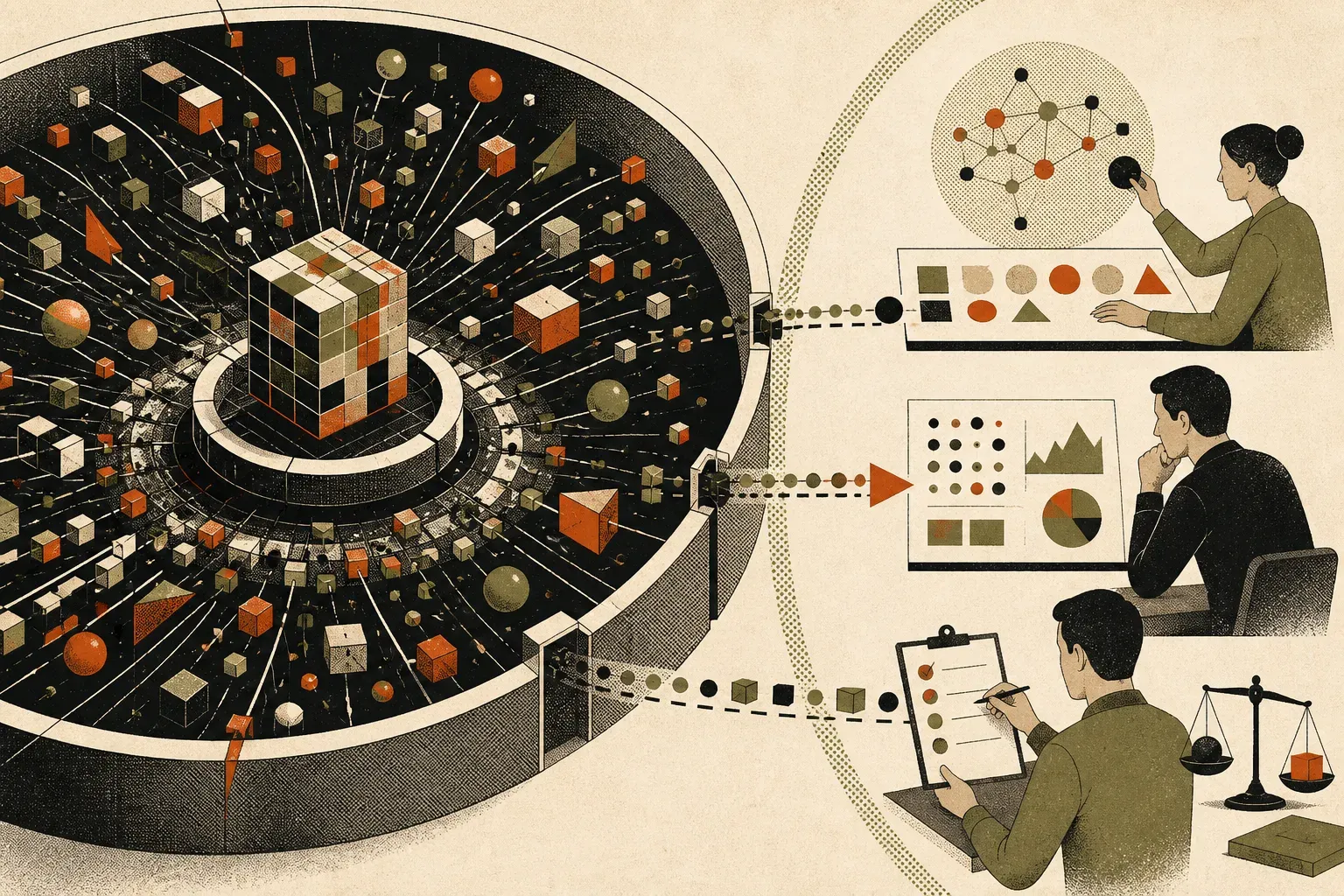
The work in an advanced Google Ads account sits in three places: deciding what the account should optimise for, building the systems that feed that to Google, and checking every week that the result matches your own numbers. The building is done by software, much of it AI. The deciding and the checking are done by a person.
What the work used to be
Ten years ago an advanced account was a large one. Thousands of keywords in single-keyword ad groups, bid modifiers by device, location and hour, match types sculpted with negatives, scripts to pause anything that missed target overnight. The skill was volume and precision inside the interface.
Google absorbed most of that. Smart Bidding sets the bid per auction using signals nobody can see or edit. Broad match plus a conversion value does what a thousand keywords used to do. Performance Max removed the ad group entirely. Most of the levers people spent a decade learning are either gone or set once and left alone.
Where it went
The levers moved outside the account.
Deciding the target. Google will hit whatever number you give it. If the number is made up, it will hit a made-up number. Working out what a lead or a sale is worth to you, by product, by lead stage, by channel, is now the highest-value task in the account. That is a spreadsheet and a conversation about margins, and it happens before anyone touches a campaign. See Your target CPA is a made-up number.
Feeding the algorithm. Smart Bidding is only as good as the conversions it sees. Most accounts send it form fills and nothing else. Calls from the search results page go unrecorded. CRM stages never make it back. Refunds and cancellations are invisible. Building the pipes that carry those outcomes to Google is engineering work: call capture, a CRM webhook, a data warehouse, offline conversion uploads with values attached. See Why calls from the search results page never get tracked and Your CRM only sends form leads back to Google.
Checking the output. An algorithm you cannot inspect needs auditing from outside. Spend against the target, conversion counts against the CRM, search terms against the brand list, settings against what was agreed. Since 17 August the target itself needs watching, because Google now treats it as a starting point. See The weekly loop and 17 August: Google converted a setting into a job.
Who builds it
AI does. An n8n workflow that scores inbound leads with a language model and posts the good ones to Google as offline conversions used to be a two-week build. It is now an afternoon, and most of that afternoon is testing. The same is true for the BigQuery SQL behind a weekly report, an Apps Script that checks settings, or a landing page template.
This is why a one-person agency can offer a data warehouse, call capture, CRM loops, landing pages and API monitoring. The implementation is cheap. What the person supplies is the specification (what exactly should this do), the judgment (does this account need it), and the verification (does it do what was specified). Fire Pixel's line for this is "we trust the machine but feed it". The machine runs the auctions. We decide what it eats and check what comes out.
What this means if you are hiring
Expect to be asked about your margins, your sales cycle and what fields your CRM holds before anyone asks about keywords. Expect the first deliverable to be a target derived from your numbers, with the working shown. Expect a weekly check that compares Google's view of the account with yours.
If the first question you get is for your keyword list, you are being sold the 2015 version.
Related: What is advanced Google Ads? · Targets from unit economics · Data warehouse · API management
FAQ
Does advanced Google Ads cost more to run?
The management fee is the same as any competent agency. The difference is where the hours go: into the pipes and the checking rather than into bid changes.
Do I need a data warehouse?
At £5k a month or more, yes. It is where CRM outcomes, call data and Google's spend meet, and the weekly check runs from it. Below that, a spreadsheet and offline conversion uploads do the job.
Is this just automation?
Automation moves the data. The decisions about what to move, what it is worth and whether it worked are made by a person. Both parts are needed.